







If you have been researching gender transition, you may have come across the question: “Is HRT used for transitioning?”
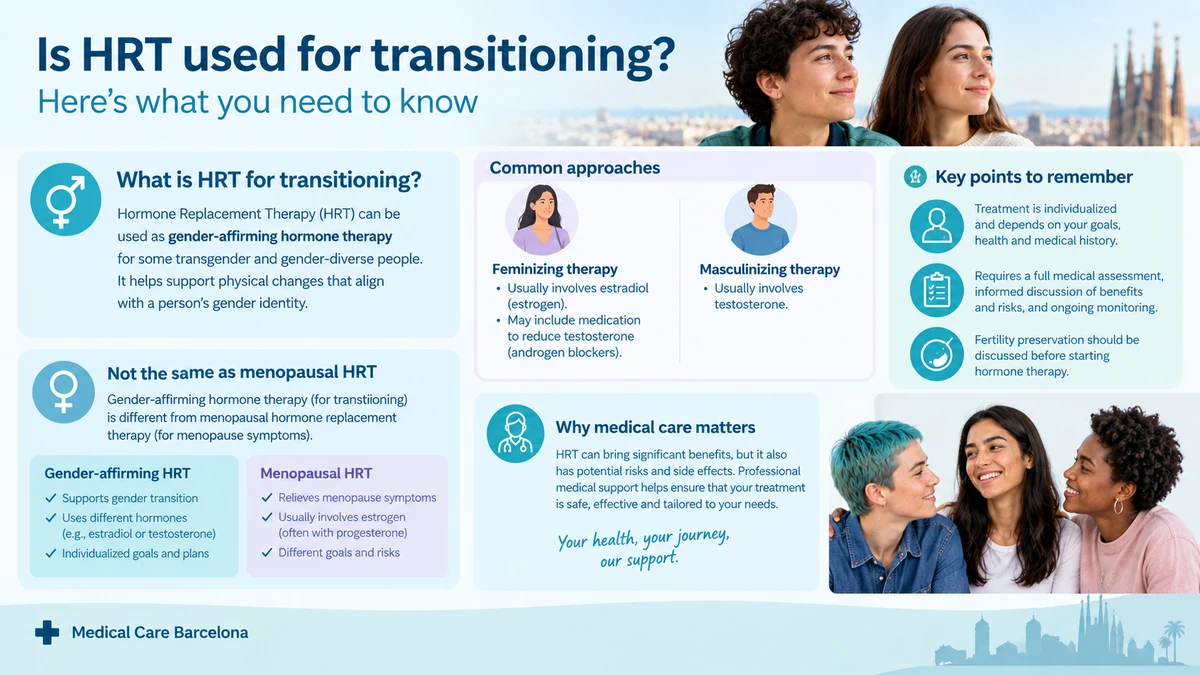
The short answer is yes. Hormone therapy can be used as part of gender-affirming medical care for some transgender and gender-diverse people who want to develop physical characteristics that are more aligned with their gender identity.
In this context, HRT usually refers to hormone therapy used to support a person’s gender transition. Healthcare professionals may also use the more specific term gender-affirming hormone therapy (GAHT).
Depending on a person’s goals, medical history and individual circumstances, hormone therapy may involve oestrogen-based treatment or testosterone-based treatment. The purpose is to produce desired physical changes while maintaining hormone levels within an appropriate physiological range.
However, HRT for transitioning is not the same as hormone replacement therapy used for menopause or other medical conditions. The hormones, goals, treatment plans and monitoring requirements can differ.
Considering HRT for transitioning?
Speak with a qualified doctor about your goals, medical history and hormone therapy options, and get personalised medical guidance.
Appointments available online or at our clinic in Barcelona.
Get Medical Advice TodayIn this article, we explain how HRT can be used during gender transition, the different approaches available, what changes may occur and why medical supervision is important.
What is HRT for transitioning?
HRT for transitioning refers to hormone therapy used to help some transgender and gender-diverse people develop physical characteristics that are more consistent with their gender identity.
Gender-affirming hormone therapy is generally individualised. A healthcare professional will consider the person’s goals, medical history, existing medications, risk factors and the type of physical changes they wish to achieve.
The Endocrine Society describes gender-affirming hormone treatment as a medical approach designed to suppress endogenous sex hormone activity and maintain sex hormone levels within an appropriate range for the person’s affirmed gender.
Hormone therapy is only one possible component of gender-affirming care. Some people choose hormone therapy, some choose surgery or other forms of care, and some do not want medical intervention.
There is no single pathway that applies to everyone.
What types of HRT are used for transitioning?
The type of hormone therapy depends primarily on the physical changes a person wants to achieve.
Feminising hormone therapy
Feminising hormone therapy is generally used by transgender women and some gender-diverse people who want to develop more traditionally feminine physical characteristics.
It commonly involves estradiol (oestrogen). Depending on the individual, treatment may also include medication intended to reduce the effects or levels of testosterone.
Possible physical changes can include:
- Breast development.
- Changes in body-fat distribution.
- Reduced muscle mass and strength.
- Reduced body-hair growth over time.
- Changes in skin texture.
- Reduced testosterone-driven sexual and reproductive functions.
The timing and extent of changes vary considerably between individuals. Not every change occurs to the same degree, and some changes may be permanent while others may reverse after stopping treatment.
The Endocrine Society describes feminising hormone therapy as treatment involving oestrogen to produce feminising changes, with testosterone reduction also forming part of treatment in appropriate patients.
Masculinising hormone therapy
Masculinising hormone therapy is generally used by transgender men and some gender-diverse people who want to develop more traditionally masculine physical characteristics.
The principal hormone used is testosterone.
Possible changes include:
- A deeper voice.
- Increased facial and body hair.
- Increased muscle mass and strength.
- Changes in body-fat distribution.
- Cessation or reduction of menstrual periods.
- Enlargement of the clitoris.
- Changes in skin and oil production.
As with feminising therapy, the effects and their timing vary between individuals.
Is HRT the same as hormone replacement therapy for menopause?
No. Although the abbreviation HRT is commonly used for both treatments, they refer to different clinical situations.
Menopausal hormone therapy is generally prescribed to manage symptoms associated with menopause and may involve oestrogen alone or oestrogen combined with a progestogen, depending on factors such as whether a person has a uterus.
Gender-affirming hormone therapy has a different purpose: it is used to produce physical changes that align more closely with a person’s gender identity.
This distinction is important because the treatment goals, hormone regimens, monitoring and clinical considerations can differ.
How does HRT help with gender transition?
Hormone therapy can change certain secondary sex characteristics by altering the balance of sex hormones in the body.
For someone undergoing a feminising regimen, oestrogen and, when appropriate, testosterone suppression can encourage physical changes associated with female puberty.
For someone undergoing a masculinising regimen, testosterone can encourage physical changes associated with male puberty.
The aim is not simply to increase or decrease a hormone. Treatment is usually carefully planned to achieve desired physical changes while considering the person’s overall health and potential risks.
The Endocrine Society recommends monitoring hormone levels and assessing potential cardiovascular, metabolic, bone and other health considerations during treatment.
Considering HRT for transitioning?
Speak with a qualified doctor about your goals, medical history and hormone therapy options, and get personalised medical guidance.
Appointments available online or at our clinic in Barcelona.
Get Medical Advice Today
What should you consider before starting HRT for transitioning?
Starting gender-affirming hormone therapy is an individual medical decision. Before treatment begins, a healthcare professional should discuss the potential benefits, limitations, risks and expected physical changes.
Medical history and health assessment
Your doctor may review:
- Your general medical history.
- Current medications and supplements.
- Cardiovascular risk factors.
- Blood pressure and other relevant health measurements.
- Relevant laboratory tests.
- Personal and family medical history.
- Your treatment goals.
The exact assessment depends on the individual and the treatment being considered.
Fertility preservation
An important consideration before starting hormone therapy is fertility.
Hormonal treatment can affect reproductive function, and some effects may be difficult or impossible to reverse. For this reason, fertility preservation options should be discussed before starting gender-affirming hormone therapy when future biological children may be important to the patient.
The Endocrine Society specifically recommends discussing fertility preservation before hormonal treatment in transgender and gender-incongruent patients.
Ongoing monitoring
HRT for transitioning is not simply a treatment that starts with one prescription and then requires no further medical care.
Regular follow-up allows healthcare professionals to monitor hormone levels, physical changes, side effects and relevant health risks.
Depending on the treatment and individual circumstances, monitoring may include blood tests and assessment of cardiovascular, metabolic, bone and reproductive health.
The treatment plan can also be adjusted over time according to the person’s response, goals and medical needs.
Is HRT safe for transitioning?
Gender-affirming hormone therapy can be an appropriate medical treatment for eligible patients, but like any medical treatment, it has potential risks and side effects.
The level of risk depends on factors including the type of hormone, dose, route of administration, age, medical history and other medications.
For this reason, obtaining hormones without medical supervision is not recommended. The NHS also advises against using hormones or other treatment that has not been prescribed by a healthcare professional.
A doctor can help you understand the potential benefits and risks in the context of your own health rather than relying on a standard dose or treatment plan found online.
How long does HRT take to produce changes?
There is no single timeline for gender-affirming hormone therapy.
Some changes may begin within the first few months, while others develop gradually over several years. The extent of physical changes can vary according to genetics, age, hormone levels, treatment regimen and individual response.
It is also important to have realistic expectations. Hormone therapy cannot produce every physical characteristic associated with a particular sex, and some changes may require additional approaches if desired.
Your doctor can explain the expected timeline for the specific treatment being considered and monitor your progress over time.
Can you start HRT without medical supervision?
It is strongly recommended that gender-affirming hormone therapy is managed by an appropriately trained healthcare professional.
Using hormones obtained without appropriate medical assessment can create unnecessary risks, particularly when the dose, formulation, interactions or underlying health conditions have not been evaluated.
Professional care also provides an opportunity to monitor hormone levels and identify potential complications early.
If you are considering HRT for transitioning, a consultation with a doctor experienced in hormone therapy can help you understand your options and decide what is appropriate for you.
Contact Medical Care Barcelona
If you are considering HRT for transitioning and would like to discuss your options with a healthcare professional in Barcelona, Medical Care Barcelona can provide medical guidance and help you understand the next steps.
Our medical service supports international patients and residents looking for accessible healthcare in Barcelona, including patients who prefer to communicate in English.
During a consultation, a doctor can discuss your medical history, goals, current medication and the potential considerations associated with hormone therapy.
If appropriate, you can also discuss what monitoring and follow-up may be required throughout your treatment.
If you are considering gender-affirming hormone therapy in Barcelona, contact Medical Care Barcelona to arrange a medical consultation.
Closing
So, is HRT used for transitioning? Yes. Hormone therapy can form an important part of gender-affirming care for some transgender and gender-diverse people.
Feminising therapy may use oestrogen-based treatment, while masculinising therapy generally uses testosterone. However, treatment should be individualised rather than based on a standard approach.
Before starting HRT, it is important to discuss your goals, medical history, potential risks, fertility considerations and monitoring requirements with a qualified healthcare professional.
If you are considering gender-affirming hormone therapy in Barcelona, Medical Care Barcelona can help you access professional medical guidance and understand your healthcare options.

Considering HRT for transitioning?
Speak with a qualified doctor about your goals, medical history and hormone therapy options, and get personalised medical guidance.
Appointments available online or at our clinic in Barcelona.
Get Medical Advice Today