







Infected Wounds, what to do

Infected wounds: signs, prevention and what to do

A cut, scrape, puncture or surgical incision can become infected when bacteria enter damaged skin and multiply. While many minor wounds heal without complications, recognising the early signs of infected wounds is important to prevent an infection from becoming more serious.

If you are wondering, “How can I tell if my wound is infected?”, the answer depends on how the wound looks, how it feels and whether symptoms are getting worse. Increasing redness, warmth, swelling, pain or pus may indicate infection, particularly when these symptoms develop or intensify after the initial injury.

Knowing how to prevent a wound from infection, how to clean it safely and what to do if it becomes infected can help support healing. However, some wounds require professional assessment, especially when they are deep, contaminated, caused by an animal or human bite, or associated with fever or spreading redness.

This guide explains the signs of wound infection, the best way to prevent infection in wounds, how to wash an infected wound and when to seek medical advice.

* Medical note: This article provides general health information and does not replace an individual medical assessment. If you have a serious injury, rapidly worsening symptoms or signs of a severe infection, seek urgent medical care.

Concerned about an infected wound?

Speak with a qualified doctor about your symptoms and get personalised medical advice on wound care, possible infection and whether further treatment may be needed.

Same-day appointments available online, at your hotel, at home or at our clinic in Barcelona.

Get Medical Advice Today

How can I tell if my wound is infected?

One of the most common questions patients ask is: “How can I tell if my wound is infected?”

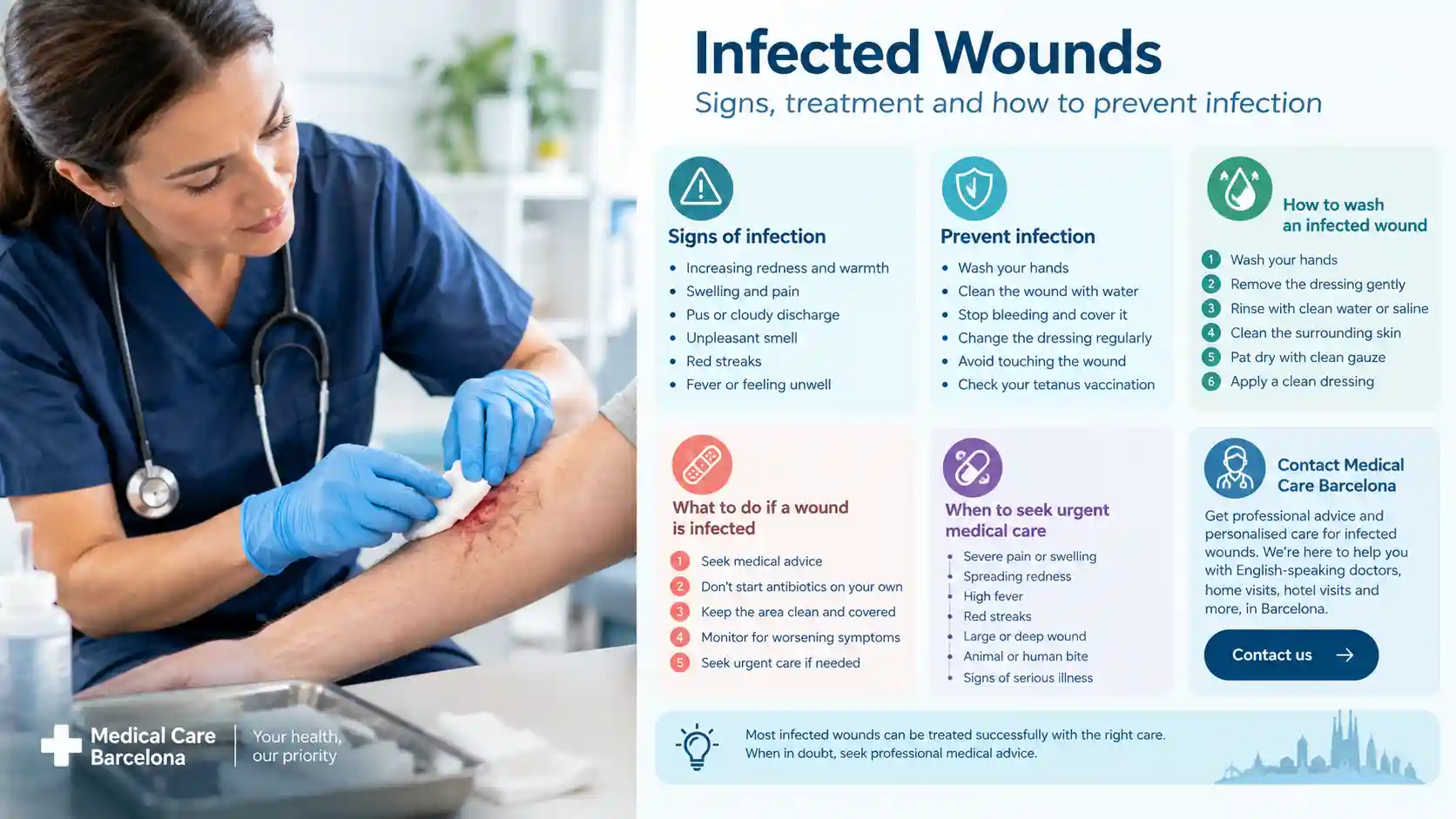
A wound that is infected may develop one or more of the following signs:

  • Increasing redness around the wound.
  • Warmth in the surrounding skin.
  • Swelling that is worsening rather than improving.
  • Pain or tenderness, particularly if it becomes more intense.
  • Pus or cloudy discharge.
  • An unpleasant smell coming from the wound.
  • Red streaks extending away from the wound.
  • Fever, chills or feeling generally unwell.


A small amount of redness or tenderness can be part of normal healing, especially shortly after an injury. However, a sign a wound is infected is often that the symptoms become more pronounced, spread or fail to improve as expected.


What does an infected wound look like?

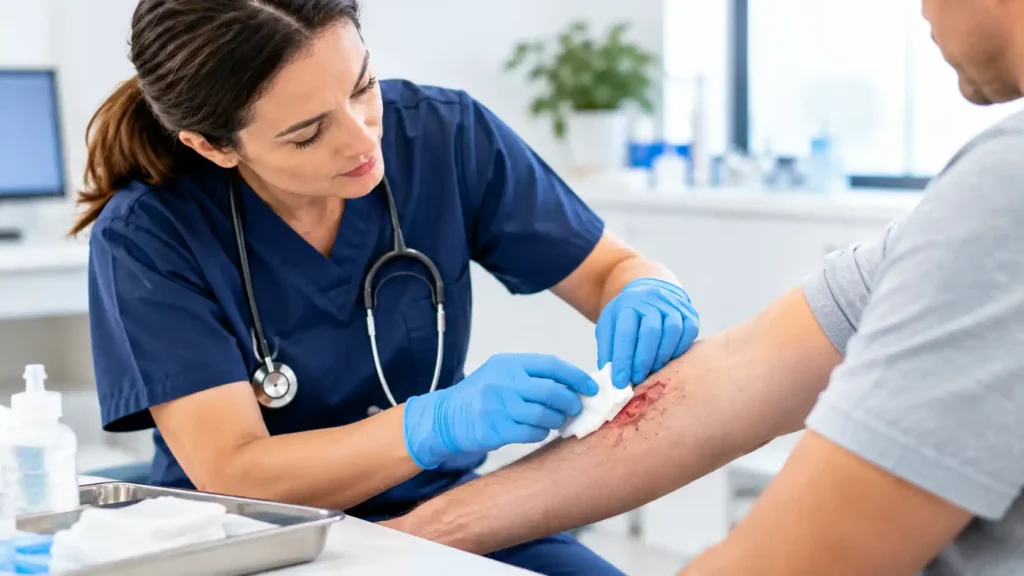
An infected wound may appear increasingly red, swollen or wet, with yellowish or greenish discharge. The surrounding skin may feel hot, and the wound may become more painful.

However, appearance alone cannot confirm an infection. Some wounds require examination to distinguish normal inflammation from cellulitis, an abscess or a deeper infection.


Which wounds are more likely to become infected?

Certain injuries carry a higher risk of infection, including:

  • Deep cuts or puncture wounds.
  • Bites from animals or people.
  • Crush injuries.
  • Dirty or contaminated wounds.
  • Wounds on the feet.
  • Wounds containing a foreign object.
  • Wounds that were not cleaned promptly.
  • Surgical wounds with increasing redness, pain or discharge.


People with diabetes, reduced immune function or other conditions that affect healing may also need earlier medical assessment.


Best way to prevent infection in wounds

The best way to prevent infection in wounds is to clean the injury promptly, protect it from contamination and monitor how it heals.


1. Wash your hands before touching the wound

Clean your hands with soap and water before and after wound care. This helps reduce the risk of introducing additional microorganisms.


2. Clean the wound with water

For a minor cut or scrape, rinse the wound with clean running water and gently clean the surrounding skin with mild soap. Remove visible dirt carefully if it is loose and easy to remove.

Do not scrub aggressively or use harsh chemicals inside the wound, as these may damage healing tissue.


3. Stop bleeding and cover the wound

Apply gentle, direct pressure with a clean cloth or sterile gauze if the wound is bleeding. Once the bleeding is controlled, cover the wound with a clean dressing or plaster.

Keep the dressing clean and change it when it becomes wet, dirty or according to the instructions provided by a healthcare professional.


4. Avoid picking or touching the wound unnecessarily

Repeatedly touching, scratching or removing scabs can interfere with healing and introduce bacteria. Avoid applying creams, herbal remedies or antiseptic products unless they are appropriate for the wound and recommended by a healthcare professional.


5. Check your tetanus vaccination status

Certain wounds, particularly deep or contaminated punctures, may require assessment of tetanus protection. If you are unsure whether your vaccination is up to date, ask a healthcare professional.


How to wash infected wound

If you are searching for how to wash infected wound, the first step is to understand that cleaning can help remove discharge and debris, but it does not replace medical treatment when an infection is present.


How to clean a minor wound safely

For a small wound that may be infected:

  1. Wash your hands thoroughly with soap and water.
  2. Remove the dressing carefully, moistening it with clean water if it is stuck.
  3. Rinse the wound gently with clean running water or sterile saline, as appropriate.
  4. Clean the surrounding skin with mild soap and water, avoiding aggressive scrubbing inside the wound.
  5. Pat the surrounding area dry with clean gauze.
  6. Apply a clean dressing if advised or if the wound needs protection.


For surgical wounds or wounds already being treated by a clinician, follow the specific wound-care instructions you have been given. Some wounds require professional irrigation, drainage or removal of damaged tissue.


What should you avoid?

Do not pour alcohol, hydrogen peroxide or other harsh substances into an open wound unless specifically instructed by a healthcare professional. These products can damage tissue and delay healing.

Do not attempt to remove deeply embedded objects, cut away damaged tissue or open a suspected abscess yourself. These situations require medical assessment.

Concerned about an infected wound?

Speak with a qualified doctor about your symptoms and get personalised medical advice on wound care, possible infection and whether further treatment may be needed.

Same-day appointments available online, at your hotel, at home or at our clinic in Barcelona.

Get Medical Advice Today

What to do with an infected wound


What to do if a wound is infected

If you are asking “wound infected, what to do?”, the safest approach is to assess the severity of the symptoms and arrange medical advice when infection is suspected.


1. Arrange a medical assessment

Contact a doctor if your wound is becoming increasingly red, swollen or painful, or if pus is appearing. A clinician can assess whether the infection is superficial, whether there is cellulitis or an abscess, and whether further treatment is needed.


2. Monitor whether symptoms are spreading

If redness is expanding, pain is worsening or you develop fever, chills or red streaks extending from the wound, seek medical attention promptly. These may indicate that the infection is spreading.


When should you seek urgent medical care?

Seek urgent medical attention if you experience:

  • Severe or rapidly worsening pain.
  • Redness or swelling spreading quickly.
  • Fever with a wound infection.
  • Red streaks extending from the wound.
  • Significant pus or a foul-smelling discharge.
  • A deep or large wound.
  • A wound caused by a human or animal bite.
  • A foreign object embedded in the wound.
  • Numbness, loss of movement or severe bleeding.
  • Signs of a serious illness, such as confusion, fainting or difficulty breathing.


A wound infection can sometimes spread into deeper tissues or the bloodstream, so prompt assessment is important when symptoms are severe.


Contact Medical Care Barcelona

If you are experiencing infected wounds and need medical advice in Barcelona, Medical Care Barcelona can help you understand the next steps.

Our english speaking doctors in Barcelona supports international patients, tourists and residents who need access to healthcare in Barcelona. If you have a wound that is infected, a medical consultation can help assess the symptoms, identify warning signs and determine whether further treatment or testing is appropriate.

Whether you are staying in a hotel, at home in Barcelona or looking for an English-speaking doctor, Medical Care Barcelona offers flexible medical consultations to suit your needs. You can arrange a doctor visit at your hotel or home, or speak with a doctor online from wherever you are.

If you are concerned about a wound infection, do not wait for symptoms to become more severe. Contact Medical Care Barcelona for professional medical guidance.


Recognising the signs of infected wounds can help you seek treatment before an infection becomes more serious. Increasing redness, warmth, swelling, pain, pus or fever should not be ignored, particularly when symptoms are worsening.

The best way to prevent infection in wounds is to clean them promptly, protect them with an appropriate dressing and monitor the healing process. If a wound becomes infected, professional assessment can determine whether cleaning, drainage, antibiotics or another treatment is necessary.

If you are unsure how to wash an infected wound, or you are wondering what to do when a wound is infected, Medical Care Barcelona can provide medical advice and help you access appropriate care in Barcelona.

Concerned about an infected wound?

Speak with a qualified doctor about your symptoms and get personalised medical advice on wound care, possible infection and whether further treatment may be needed.

Same-day appointments available online, at your hotel, at home or at our clinic in Barcelona.

Get Medical Advice Today

Leave a Reply

Your email address will not be published. Required fields are marked *

Need to book an appointment? Choose between Online Consultation or a Doctor Visiting You: