










What are normal testosterone levels in men?
There is no single testosterone result that can be interpreted in isolation for every man. Laboratory methods, reference ranges, age, health status and the timing of the blood sample can all influence the interpretation.
Understanding testosterone blood test results
Total testosterone is usually the first measurement used when assessing a possible deficiency. In selected cases, a clinician may also request free testosterone, which represents the portion not bound to proteins in the blood.
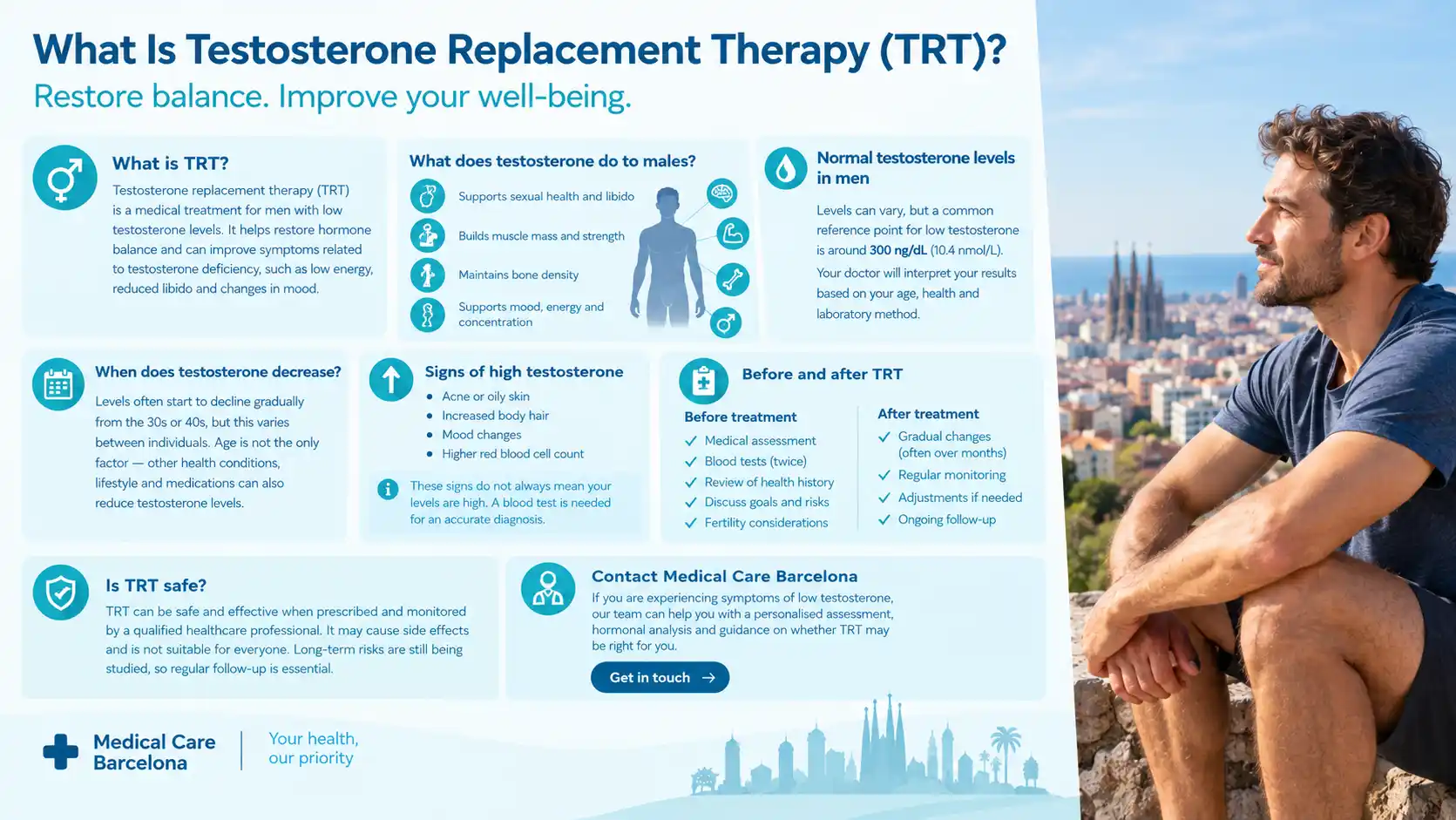
A commonly used clinical reference point for low total testosterone is around 300 ng/dL (approximately 10.4 nmol/L). However, this is not a universal cut-off for every laboratory or patient. The Endocrine Society guideline highlights a lower reference limit of approximately 264 ng/dL (9.2 nmol/L) for certain standardised assays in healthy young men. Results must therefore be interpreted using the appropriate laboratory method and clinical context.
Why should testosterone be measured in the morning?
Testosterone levels generally vary throughout the day and may be affected by food intake and temporary illness. For this reason, testing is usually performed in the morning, often while fasting, and an initially low result is normally repeated on a separate morning.
A doctor may also request additional tests to help identify whether a deficiency is related to the testicles, the pituitary gland or another underlying factor.
A single low result does not necessarily mean that you need TRT. The diagnosis should consider both your symptoms and consistently low laboratory results, rather than relying on a number alone.
What are signs of high testosterone?
Although this article focuses on low testosterone, unusually high levels can also require medical assessment. Possible signs or associated changes may include acne, oily skin, changes in hair growth or, when testosterone is taken externally, an increase in red blood cell levels.
However, these signs do not prove that testosterone is high. Some men have no obvious symptoms, and results can be affected by supplements, anabolic steroid use, prescribed hormones and laboratory factors.
If a blood test shows unexpectedly high testosterone, a clinician can review the result, any products you are taking and whether repeat testing or further investigation is needed. Avoid taking testosterone or hormone-boosting supplements without medical guidance.
What age does testosterone decrease?
Testosterone levels often decline gradually as men get older, but there is no exact age at which this happens to everyone.
Testosterone and ageing
Some men begin to experience a gradual decline from their thirties or forties. The pace varies considerably, and many older men continue to have testosterone levels within their laboratory’s reference range.
Age alone does not establish testosterone deficiency. Low levels may also be associated with obesity, sleep disorders, certain chronic illnesses, testicular conditions, pituitary problems and some medications.
Can lifestyle affect testosterone levels?
Lifestyle and general health can influence hormonal function. Depending on the individual, helpful measures may include:
- Maintaining a healthy weight.
- Exercising regularly, including resistance training.
- Getting sufficient, consistent sleep.
- Limiting excessive alcohol consumption.
- Reviewing medications and health conditions with a doctor.
- Seeking assessment for possible sleep apnoea or other relevant disorders.
These measures can support overall health, but they are not guaranteed to correct a clinically significant testosterone deficiency. If symptoms persist, a medical evaluation can help identify the cause and determine whether further testing is appropriate.
TRT should not be prescribed automatically because a man is getting older or has a testosterone result at the lower end of a reference range. The decision should be individualised and based on clinical evidence.
Before and after testosterone therapy
Understanding what happens before and after testosterone therapy can help men make informed decisions and establish realistic expectations.
Before TRT: medical assessment and blood tests
Before treatment begins, a clinician should review your symptoms, medical history, current medications, fertility plans and relevant risk factors.
The assessment may include:
- Two morning testosterone blood tests to confirm low levels.
- Additional hormonal tests where indicated.
- A review of possible underlying causes.
- Assessment of blood pressure and relevant cardiovascular risks.
- Blood count testing and other baseline investigations as appropriate.
- Discussion of fertility, potential side effects and follow-up requirements.
The doctor should also review whether TRT is appropriate given your individual circumstances. Testosterone therapy can be unsuitable for some patients, and decisions about treatment require careful consideration of potential benefits and risks.
After TRT: what changes can you expect?
The effects of TRT vary according to the cause and severity of the deficiency, the treatment formulation, the dose and the individual’s response.
When treatment is appropriate, some men may notice changes in sexual desire, energy or other symptoms over time. Changes in body composition, muscle mass or bone health may take longer and depend on several factors. Not everyone experiences the same improvements, and TRT does not guarantee better mood, physical performance or sexual function.
The aim is to restore testosterone to an appropriate range and improve symptoms associated with a confirmed deficiency, rather than to achieve excessively high levels.
How long does testosterone therapy take to work?
There is no single timeline for everyone. Different symptoms may respond at different rates, and some may not improve if they have another underlying cause.
Regular follow-up allows the clinician to assess whether symptoms are improving, review blood results and adjust the plan when necessary. If there is little or no improvement, the doctor may reconsider the diagnosis or investigate other explanations.
What are the risks of TRT?
TRT requires ongoing medical supervision because it can cause side effects and may not be suitable for every man. Potential concerns include:
- Increased red blood cell count, which may require intervention.
- Acne or oily skin.
- Fluid retention in some patients.
- Suppression of sperm production and reduced fertility.
- Changes in blood pressure.
- The need to assess prostate health and other individual risk factors.
Testosterone products can increase blood pressure, so monitoring is important, particularly for men with hypertension. The evidence around some long-term outcomes continues to evolve, and potential benefits and risks should be discussed with a qualified clinician before treatment.
Follow-up commonly includes reviewing symptoms and side effects, measuring testosterone levels, checking blood counts and assessing other health considerations relevant to the individual. Prostate-related assessment may also be appropriate according to age, history and clinical circumstances.
Never change your dose or stop and restart testosterone without discussing it with your treating clinician. If fertility is important to you, make this clear before starting treatment, because external testosterone can significantly reduce sperm production.
Contact Medical Care Barcelona for men testosterone treatment
If you are experiencing persistent fatigue, reduced libido, changes in physical performance or other symptoms that may be related to low testosterone, a medical assessment can help you understand the possible causes and next steps.
At Medical Care Barcelona, we offer a dedicated testosterone hormone replacement therapy service in Barcelona, with an approach based on individual assessment, hormonal analysis, personalised medical planning and ongoing follow-up.
Our medical team can help you understand your blood test results, discuss whether testosterone deficiency may be contributing to your symptoms and explain the options that may be appropriate for your circumstances.
The process begins with an evaluation of your health and symptoms. If testing confirms a deficiency and TRT is considered suitable, the doctor can discuss the treatment approach, expected outcomes, potential risks and monitoring requirements with you.
Closing
So, what is TRT? Testosterone replacement therapy is a medical option for men with symptoms and consistently low testosterone levels confirmed through appropriate testing. It can help address certain effects of testosterone deficiency, but it is not a universal solution for fatigue, ageing or reduced physical performance.
Understanding your hormone levels, identifying the underlying cause of symptoms and discussing the potential benefits and risks with a qualified healthcare professional are essential steps before starting treatment.
If you are concerned about low testosterone, Medical Care Barcelona can help you explore your options through a personalised medical assessment and appropriate follow-up.