









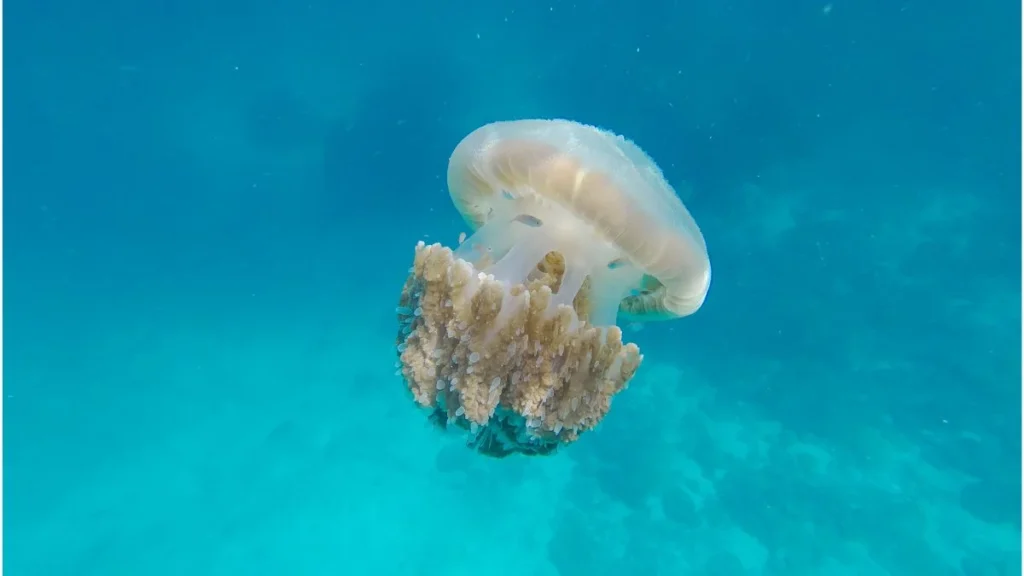
Jellyfish sting symptoms: What does it feel like?
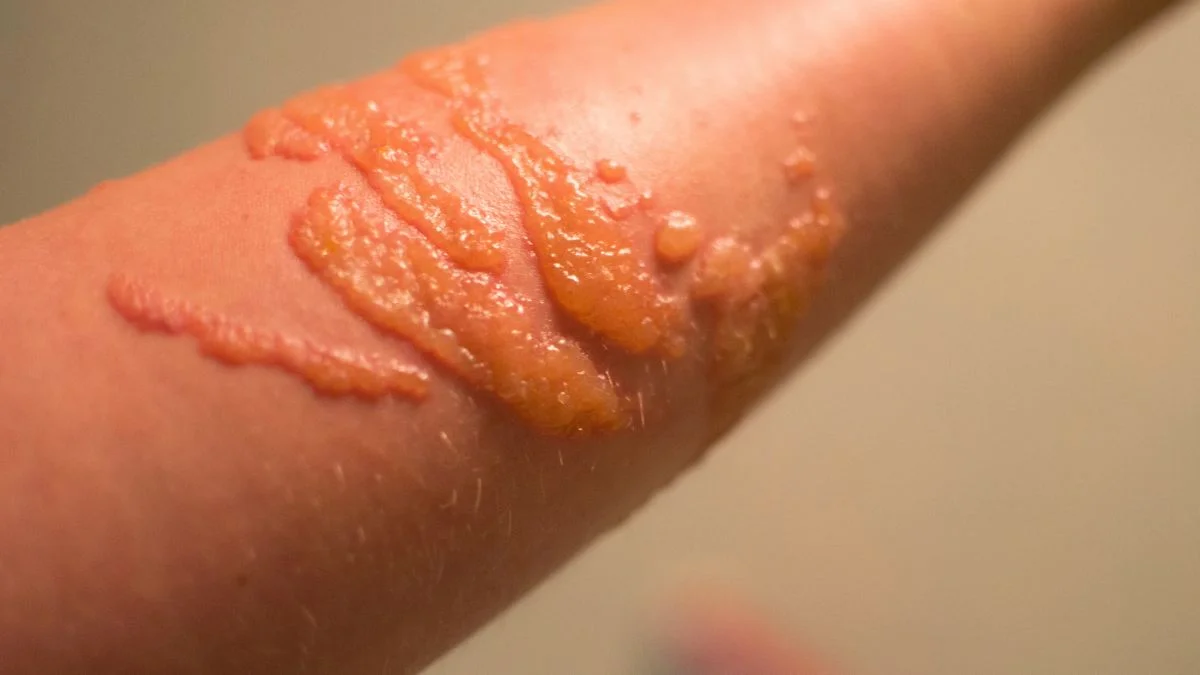
Jellyfish have specialised stinging cells in their tentacles that release venom when they come into contact with human skin. A jellyfish sting can cause an immediate burning or stinging sensation, followed by symptoms such as:
- Pain or burning
- Redness and skin irritation
- Itching
- Local swelling
- Small raised marks or blisters on the skin
The severity of the reaction depends on factors such as the type of jellyfish, the amount of venom released, the area of the body affected and the individual’s sensitivity.
In Spain, most jellyfish stings are mild and affect only the skin. However, more general symptoms can occasionally occur, so it is important to monitor your condition after being stung.
What to do after a jellyfish sting in Spain
If you or someone travelling with you is stung by a jellyfish, the first priority is to get safely out of the water.
1. Get out of the water
Leave the sea calmly and safely. If you feel dizzy, weak or unwell, ask a lifeguard or beach first-aid service for assistance.
Avoid touching the jellyfish, even if it appears to be dead, as parts of the animal may still cause a sting.
2. Do not rub the affected area
One of the most important things to remember after a jellyfish sting is not to rub or scratch the affected skin.
Rubbing can increase irritation and may cause remaining stinging cells to release additional venom.
3. Rinse the area with seawater or saline solution
The Spanish Ministry of Health recommends cleaning the affected area with seawater or saline solution without rubbing it. Fresh water should generally be avoided immediately after a jellyfish sting because it can potentially trigger additional discharge from remaining stinging cells.
Spanish Ministry of Health – Jellyfish sting recommendations
4. Remove visible tentacles carefully
If tentacles remain attached to your skin, do not touch them with your bare hands.
If appropriate first-aid equipment is available, visible tentacles can be removed carefully. If you are unsure how to do this safely, ask a lifeguard or healthcare professional for assistance.
5. Apply cold indirectly
After cleaning the affected area, cold can help reduce pain and inflammation.
The Spanish Ministry of Health recommends applying cold indirectly. This means using a cold pack or similar method without placing ice directly against the skin.
6. Avoid unproven home remedies
There are many myths surrounding jellyfish sting treatment, but household remedies are not necessarily safe or effective.
Avoid applying substances such as urine, alcohol or other household products to the affected area. If symptoms are significant or worsening, seek professional medical advice rather than relying on home remedies.
When does a jellyfish sting need medical treatment?
Most jellyfish stings improve with time, but medical assessment may be appropriate if symptoms are severe, persistent or getting worse.
You should see a doctor after a jellyfish sting if you experience:
- Severe or increasing pain
- Significant or worsening swelling
- Extensive redness or skin irritation
- Persistent symptoms that do not improve
- Dizziness, weakness or feeling faint
- Nausea or vomiting
- Difficulty breathing
- Chest discomfort
- Swelling of the lips, tongue, face or throat
- A widespread allergic-type reaction
- A sting affecting the eyes, mouth or another particularly sensitive area
The Spanish Ministry of Health advises seeking medical assistance when pain is intense or the person’s condition worsens.
What if you have difficulty breathing?
Difficulty breathing, swelling of the mouth or throat, severe dizziness, loss of consciousness or signs of a severe allergic reaction require urgent medical attention.
In these circumstances, do not rely on an online consultation. Seek emergency medical care immediately.
Can you see a doctor online for a jellyfish sting?
If your symptoms are mild or moderate but you are unsure whether you need medical attention, an online doctor consultation can be a convenient way to discuss your symptoms with a healthcare professional.
This can be particularly useful for tourists and international visitors in Barcelona who may be unfamiliar with the Spanish healthcare system or who prefer to communicate with a doctor in English.
However, an online consultation cannot replace an in-person examination when a physical examination is necessary.
If your symptoms are severe, rapidly worsening or suggest a serious allergic reaction, you should seek urgent in-person medical care rather than relying on an online consultation.
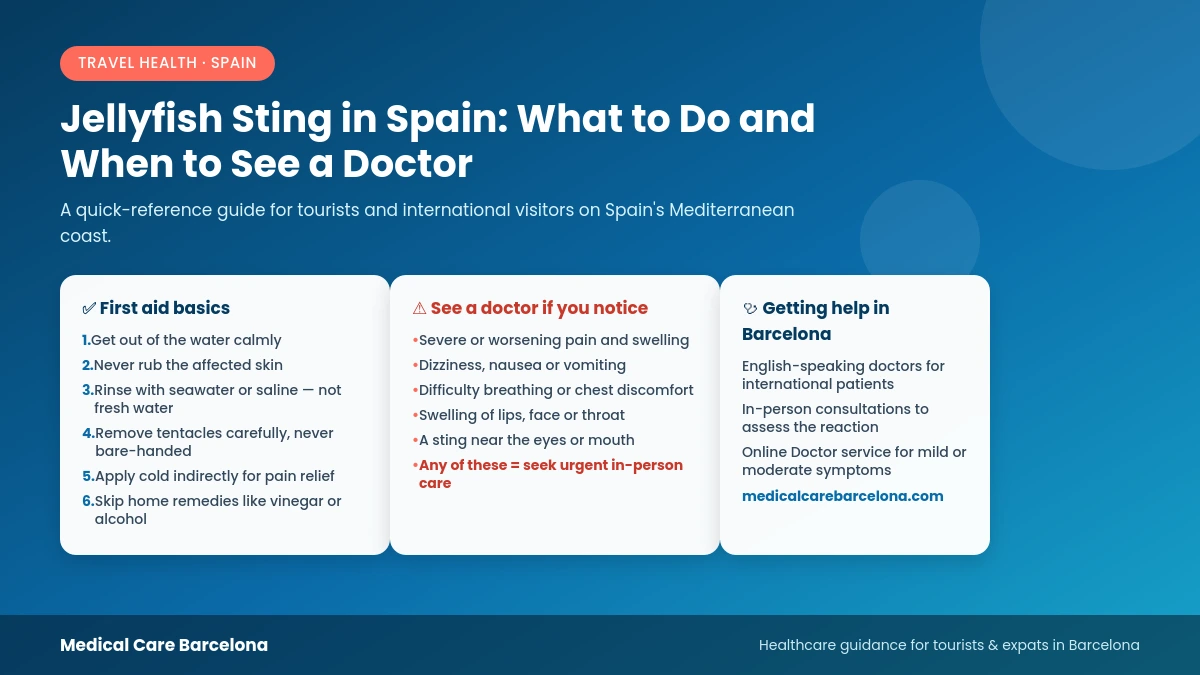
Medical Care Barcelona: Help for jellyfish stings in Barcelona
Getting medical care while travelling can be stressful, particularly when you are experiencing pain and are unfamiliar with the local healthcare system.
At Medical Care Barcelona, international patients can access medical consultations in person or online, making it easier to get professional medical advice during your stay in Barcelona.
English-Speaking doctors in Barcelona for international patients
If you are looking for English speaking Doctors in Barcelona, communicating with a healthcare professional in English can make it much easier to explain your symptoms, understand your treatment options and feel confident about the care you receive.
Medical Care Barcelona provides medical consultations for international patients, tourists and expats in Barcelona, with doctors who can communicate in English.
If you have suffered a jellyfish sting in Barcelona, an in-person consultation allows a doctor to assess the skin reaction, evaluate your symptoms and determine whether further treatment or follow-up is necessary.
Doctor Online: Medical advice without leaving your hotel
If travelling across Barcelona is inconvenient, an online doctor consultation may be a convenient alternative when your symptoms are appropriate for remote assessment.
With Medical Care Barcelona’s Doctor Online service, international patients can discuss their symptoms remotely with a healthcare professional.
You can learn more about the service here:
Online Doctor Consultation in Barcelona
During an online consultation, a doctor may be able to assess your symptoms, discuss what happened, review photographs of the affected skin when appropriate and advise you about the next steps.
If an in-person examination is necessary, the doctor can recommend that you seek appropriate face-to-face medical care.
Don’t let a jellyfish sting ruin your trip to Spain
A jellyfish sting can be an unpleasant interruption to your holiday, but most cases can be managed with appropriate first aid and careful monitoring.
The most important things to remember are:
- Get out of the water safely.
- Do not rub or scratch the affected area.
- Rinse the area with seawater or saline solution.
- Apply cold indirectly to help with pain and inflammation.
- Monitor your symptoms carefully.
- Seek medical attention if symptoms are severe, persistent or worsening.
If you are in Barcelona and want to speak to a healthcare professional in English, Medical Care Barcelona offers both in-person and online consultation options for international patients.
Your holiday should be about enjoying Spain — not worrying about where to find a doctor when something goes wrong.