
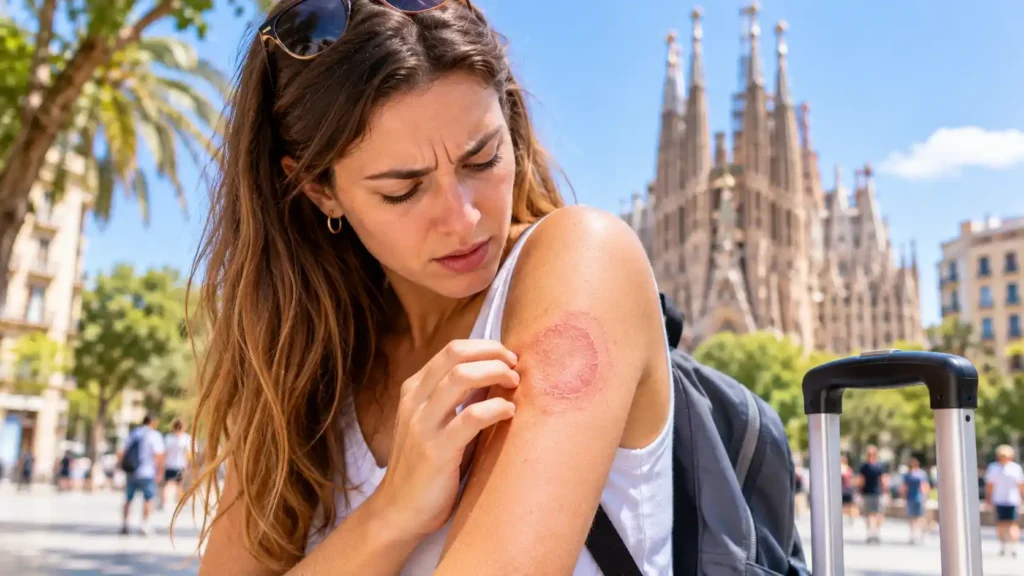
Skin problems can quickly become an unpleasant part of a holiday. Spending time in hot weather, sweating more than usual, wearing damp clothing or using shared showers and changing facilities can increase exposure to conditions that favour certain fungal skin infections.
If you notice itchy patches, red or circular rashes, peeling skin, discolouration or dry areas, you may wonder whether you have developed fungal sores on skin. Fungal infections can affect different parts of the body and produce a variety of symptoms. Some are relatively mild, while others require medical assessment and specific treatment.
Understanding the symptoms, possible causes and available treatments can help you recognise a fungal infection on skin and know what to do if it develops while travelling.
In this guide, we explain the main types of fungal skin infections, how to recognise their symptoms, what treatments are available and when you should consult a doctor in Barcelona.
Concerned about a fungal skin infection?
Speak with a qualified English-speaking doctor about your skin symptoms, possible causes and whether further medical assessment or antifungal treatment may be appropriate.
Same-day appointments available online, at your hotel, at home or at our clinic in Barcelona.
Get Medical Advice TodayIf you experience rapidly spreading redness, severe skin pain, fever with a worsening rash or other signs of a serious infection, seek urgent medical attention. Call 112 if you experience symptoms of a medical emergency.
What causes skin fungal infections?
Skin fungal infections occur when certain fungi multiply on the skin, hair or nails. Some fungi live naturally on the human body without causing problems. However, under favourable conditions, they can grow excessively or spread to other areas, resulting in an infection.
Understanding the cause of skin fungal infections can help you reduce your risk, particularly when travelling to warm or humid destinations.
Common causes and risk factors
Several factors can contribute to the development of a fungal infection on skin:
- Heat and humidity. Warm, humid environments encourage fungal growth. Sweating more than usual, particularly during summer holidays or outdoor activities, can create favourable conditions for infection.
- Excessive sweating. Areas where sweat accumulates, such as the feet, groin, armpits and skin folds, can become warm and moist. This may encourage certain fungi and yeasts to multiply.
- Damp clothing and footwear. Wearing wet swimming costumes, sweaty sportswear or shoes that do not allow your feet to breathe can increase moisture and irritation.
- Shared facilities. Swimming pools, changing rooms, communal showers and gym facilities can expose you to contaminated surfaces. Walking barefoot in these environments may increase the risk of infections such as athlete’s foot.
- Direct contact with infected people or animals. Some fungal infections, particularly ringworm, can spread through direct contact with an infected person or animal. They can also spread through contaminated towels, clothing, bedding or other personal items.
- Weakened immune system. People with weakened immune systems may be more susceptible to certain fungal infections or develop more extensive infections.
- Certain medical conditions. Diabetes, some immune-related conditions and treatments that suppress the immune system can increase the risk of particular fungal skin infections.
Why can fungal infections develop while travelling?
Travelling can change your usual habits and expose your skin to different environmental conditions.
For example, spending several hours walking in warm weather, wearing closed shoes, swimming frequently or using communal showers can increase moisture and exposure to fungi.
However, developing a rash while travelling does not automatically mean you have a fungal infection. Insect bites, allergic reactions, eczema and bacterial infections can cause similar skin changes.
If you notice a new or persistent skin problem, a medical assessment can help establish the cause and identify the most appropriate treatment.
What are the different types of fungal skin infections?
There are several fungal infection skin types, and they do not all look the same. Some produce circular, itchy rashes, while others cause peeling, cracks, redness or changes in skin colour.
The appearance and location of the affected area can provide useful clues, although a medical professional may need to examine the skin to confirm the diagnosis.
1. Ringworm (Tinea Corporis)
Despite its name, ringworm is not caused by a worm. It is a fungal infection caused by dermatophytes, which affect the outer layers of the skin.
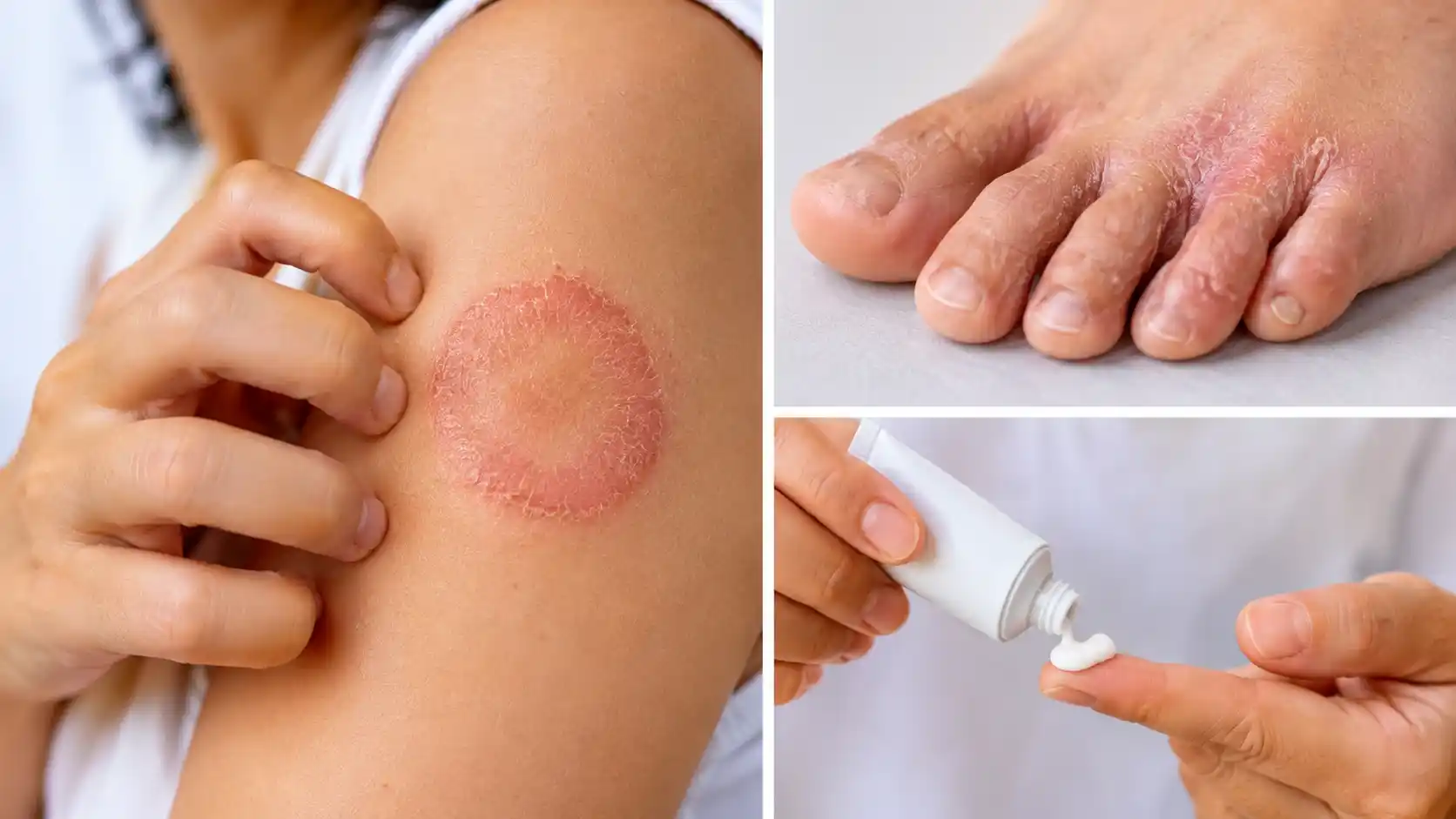
It commonly produces circular or ring-shaped patches with a raised, scaly edge. The centre may appear clearer than the surrounding skin. Common symptoms include:
- Itchy, circular or oval-shaped patches.
- Redness or darker discolouration, depending on skin tone.
- A raised, scaly border.
- Gradual expansion of the affected area.
- Dry or flaky skin.
Ringworm can affect different parts of the body and may spread through contact with infected people, animals or contaminated objects.
2. Athlete’s Foot (Tinea Pedis)
Athlete’s foot is a common fungal infection affecting the feet, particularly between the toes.
It is more likely to develop in warm, damp environments, such as communal showers, swimming pool changing rooms and sweaty footwear. Symptoms may include:
- Itching or burning between the toes.
- Peeling or flaky skin.
- Redness and irritation.
- Cracked skin or small fissures.
- Blisters in some cases.
- Dry, scaly skin on the soles or sides of the feet.
If left untreated, the infection may spread to other parts of the foot or, in some cases, the toenails.
3. Jock Itch (Tinea Cruris)
Jock itch is a fungal infection affecting the groin and nearby skin folds. It is more common in warm, moist areas where friction and sweating occur.
It may develop after exercise, prolonged periods in sweaty clothing or during travel in hot weather. Typical symptoms include:
- An itchy rash around the groin.
- Red or darker patches with a defined border.
- Scaling or peeling skin.
- Irritation that becomes worse with sweating.
- A rash that may extend towards the inner thighs.
Keeping the area clean and dry can help reduce irritation, but an antifungal treatment may be necessary to clear the infection.
4. Pityriasis Versicolor
Pityriasis versicolor is a common superficial fungal infection associated with Malassezia, a type of yeast that normally lives on the skin.
When this yeast grows excessively, it can cause patches of altered skin pigmentation, particularly on the chest, back, shoulders, neck and upper arms.
This condition is a common cause of fungal discoloration of skin. Symptoms may include:
- Lighter or darker patches compared with surrounding skin.
- Fine scaling or a slightly dry appearance.
- Mild itching in some cases.
- Patches that become more noticeable after sun exposure because they do not tan in the same way as surrounding skin.
Pityriasis versicolor is not generally spread from person to person. It can recur, particularly in warm and humid conditions.
Importantly, skin colour changes can remain visible for weeks or months after successful treatment. This does not necessarily mean the infection is still active.
5. Cutaneous Candidiasis
Candida is a type of yeast that can cause infections in areas where skin rubs together and moisture accumulates.
Common locations include the armpits, groin, areas beneath the breasts and other skin folds. Symptoms can include:
- Red or inflamed skin.
- Itching or burning.
- Moist or irritated patches.
- Small spots around the edges of the affected area.
- Cracks or discomfort in skin folds.
Candida-related skin infections are more likely in people with certain risk factors, including diabetes, immune suppression and prolonged moisture or friction.
What does fungal dry skin look like?
Fungal dry skin can present in different ways depending on the infection.
For example, ringworm may cause dry, scaly patches with a raised border, while athlete’s foot can produce peeling and cracked skin between the toes. Pityriasis versicolor may cause fine scaling over areas of discoloured skin.
However, dry or flaky skin is not necessarily caused by fungi. Eczema, contact dermatitis, psoriasis and simple skin dryness can produce similar symptoms.
If the affected area persists, spreads or becomes increasingly uncomfortable, it is advisable to seek medical assessment rather than assuming that it is a fungal infection.
Concerned about a fungal skin infection?
Speak with a qualified English-speaking doctor about your skin symptoms, possible causes and whether further medical assessment or antifungal treatment may be appropriate.
Same-day appointments available online, at your hotel, at home or at our clinic in Barcelona.
Get Medical Advice TodayIf you experience rapidly spreading redness, severe skin pain, fever with a worsening rash or other signs of a serious infection, seek urgent medical attention. Call 112 if you experience symptoms of a medical emergency.
Skin fungal infections treatment
The most appropriate skin fungal infections treatment depends on the type of fungus, the affected area and the severity of the infection.
Some superficial infections can be treated with antifungal creams or other topical products. More extensive, persistent or difficult-to-treat infections may require additional medical treatment.
A correct diagnosis is important because fungal infections can resemble other skin conditions, and the wrong treatment may delay recovery.
1. Topical antifungal treatments
Antifungal creams, gels, sprays or powders are commonly used for superficial fungal infections affecting the skin.
These medicines work against certain fungi and are used for conditions such as ringworm, athlete’s foot and some yeast-related skin infections.
Treatment duration varies according to the product, infection and affected area. It is important to follow the instructions and complete the recommended course, even if the symptoms improve before the treatment ends.
2. Oral antifungal medication
Some infections may require oral antifungal medication, particularly when they:
- Cover a large area of the body.
- Affect the scalp or hair.
- Involve the nails.
- Keep returning.
- Do not respond to appropriate topical treatment.
- Are severe or difficult to treat.
Oral antifungals require medical assessment because they can have side effects and interact with other medicines. Some may also require monitoring, depending on the patient’s health and the medication prescribed.
Do not take oral antifungal medication without medical advice.
3. Keep the affected area clean and dry
Alongside appropriate medication, simple hygiene measures can help prevent the infection from spreading and reduce moisture.
Consider the following recommendations:
- Wash the affected area gently and dry it carefully.
- Pay particular attention to skin folds and the spaces between your toes.
- Change sweaty clothing as soon as possible.
- Wear clean, breathable clothing and socks.
- Avoid staying in wet swimming costumes or sportswear for long periods.
- Use your own towels and avoid sharing personal items.
- Wash clothing and towels regularly.
- Wear flip-flops in communal showers and changing rooms.
These measures can support treatment, but they do not replace antifungal medication when an infection requires it.
4. Avoid using steroid creams without medical advice
One important mistake is treating an undiagnosed rash with a corticosteroid cream.
Steroids can reduce redness and itching temporarily, but they may also mask the appearance of a fungal infection and allow it to spread or become more difficult to diagnose.
Some combination creams contain both an antifungal and a corticosteroid. These should only be used when recommended by an appropriate healthcare professional.
If you are unsure whether a rash is fungal, seek medical advice before applying a steroid-containing product.
How to get rid of a skin fungal infection
If you are wondering how to get rid of a skin fungal infection, the most important step is identifying the type of infection before choosing a treatment.
A healthcare professional may be able to diagnose a superficial fungal infection by examining the affected area. In some cases, they may recommend taking a small skin scraping or performing another test to confirm the diagnosis.
Once the infection has been identified, treatment may involve:
- Using an appropriate antifungal product.
- Following the recommended treatment duration.
- Keeping the affected area clean and dry.
- Avoiding shared towels, clothing and personal items.
- Monitoring the skin to check whether the infection is improving.
If the rash continues to spread, does not improve with treatment or keeps returning, a further medical assessment may be necessary.
When should you see a doctor?
Not every fungal skin infection requires urgent medical attention, but you should arrange a medical consultation if:
- The rash is spreading or affecting several areas.
- The skin becomes increasingly red, painful or swollen.
- You notice pus, discharge or open wounds.
- The symptoms do not improve with appropriate treatment.
- The infection repeatedly returns.
- You are unsure whether the problem is fungal or another skin condition.
- You have diabetes or a weakened immune system.
Seek prompt medical attention if you develop fever, rapidly spreading redness, severe pain or other signs of a potentially serious infection.
Contact Medical Care Barcelona
Developing a skin problem while travelling can be frustrating, particularly when you are unfamiliar with the local healthcare system or unsure where to seek medical advice.
If you are visiting Barcelona and notice an itchy rash, discoloured patches, peeling skin or other changes, a medical consultation can help determine whether you may have a fungal infection or another dermatological condition.
At Medical Care Barcelona, international visitors, expatriates and residents can access private medical consultations in English and other languages.
Depending on your needs, consultation options include:
- Online doctor consultations: A convenient way to discuss non-emergency symptoms and receive initial medical guidance.
- Doctor visits at your hotel or home: An option for patients who need medical assessment without travelling to a clinic, subject to availability.
- Private clinic consultations: An opportunity to have your symptoms assessed and discuss appropriate next steps.
A doctor can examine the affected area, consider possible causes and advise whether further testing or antifungal treatment is necessary.
If you are experiencing a skin problem during your stay in Barcelona, do not rely on self-diagnosis. Getting appropriate medical advice can help you avoid unsuitable treatments and manage the condition effectively.
Conclusion
Fungal sores on skin can refer to several different types of fungal skin infections, each with its own symptoms and treatment requirements. They may cause itching, redness, peeling, circular rashes, cracks or changes in skin colour.
Warm weather, humidity, sweating, damp clothing and contact with contaminated surfaces can contribute to certain infections, making them particularly relevant when travelling.
The most effective way to manage a fungal infection is to identify its cause and use the appropriate antifungal treatment. Keeping the skin clean and dry and avoiding the sharing of personal items can also help reduce the risk of spreading an infection.
However, not every rash or skin lesion is fungal. If your symptoms are persistent, spreading, painful or unusual, seek medical advice to establish the correct diagnosis.
For non-emergency skin concerns, Medical Care Barcelona offers private medical consultations with English-speaking doctors in Barcelona for international patients, residents and visitors who need medical guidance during their stay.
Medical Sources and References
- World Health Organization — Ringworm (Tinea): Causes, symptoms, transmission and treatment.
- CDC Yellow Book — Post-Travel Dermatologic Conditions: Skin infections in travellers and differential diagnosis.
- CDC — Treatment of Ringworm: Antifungal treatment options and precautions regarding corticosteroid use.
- NHS — Pityriasis Versicolor: Skin pigmentation changes, symptoms and treatment.
- DermNet — Fungal Skin Infections: Classification and characteristics of fungal skin infections.

Concerned about a fungal skin infection?
Speak with a qualified English-speaking doctor about your skin symptoms, possible causes and whether further medical assessment or antifungal treatment may be appropriate.
Same-day appointments available online, at your hotel, at home or at our clinic in Barcelona.
Get Medical Advice TodayIf you experience rapidly spreading redness, severe skin pain, fever with a worsening rash or other signs of a serious infection, seek urgent medical attention. Call 112 if you experience symptoms of a medical emergency.
