
How long does an anxiety attack last?
There is no single answer to how long should an anxiety attack last, because the term can describe different experiences.
Anxiety may build over several minutes or longer and remain present while a stressful situation continues. It may gradually improve when the trigger passes, when you feel safer or when you use techniques that help regulate your breathing and attention.
A panic attack typically reaches its peak within minutes. Many panic attacks last around 5–20 minutes, although symptoms can persist for longer in some people. After the most intense phase has passed, you may continue to feel tired, unsettled or worried about another episode.
The duration can depend on several factors, including:
- The intensity of the anxiety.
- Whether the stressful situation is ongoing.
- How you respond to the symptoms.
- Sleep quality and general stress levels.
- Caffeine, alcohol or other substances.
- Whether an underlying medical or mental health condition is contributing to the symptoms.
If an episode lasts longer than expected, keeps returning or significantly interferes with your daily activities, arrange a medical assessment. Do not assume that prolonged or worsening symptoms are simply anxiety.
Seek emergency medical attention if you experience severe or persistent chest pain, serious difficulty breathing, fainting or other potentially dangerous symptoms.
What can cause an anxiety attack?
There is no single explanation for every anxiety episode. The reasons for an anxiety attack can include psychological stress, environmental changes, physical health factors and the way your body responds to perceived threats.
Identifying possible triggers may help you understand your experiences and find ways to manage them. Common contributing factors include:
1. Stress and emotional pressure
Work demands, relationship difficulties, financial concerns, family problems or important life changes can contribute to heightened anxiety. When stress accumulates, even a relatively small event may feel overwhelming.
2. Travel and unfamiliar environments
Travelling can disrupt familiar routines and introduce new sources of uncertainty. Language barriers, navigating an unfamiliar city, concerns about health or being far from your usual support network may increase stress.
3. Lack of sleep
Poor sleep can make it more difficult to manage emotions and cope with everyday stress. If you are already anxious, sleep disruption may intensify your symptoms.
4. Caffeine, alcohol and other substances
Caffeine can increase alertness and contribute to a racing heart, shaking or restlessness in some people. Alcohol may disrupt sleep and contribute to anxiety as its effects wear off. Other substances and certain medications can also affect anxiety levels.
5. Previous frightening experiences
People who have experienced trauma or distressing events may become anxious in situations that remind them of those experiences.
6. Ongoing anxiety or panic-related conditions
Some people experience anxiety episodes as part of a broader mental health condition, such as generalised anxiety disorder or panic disorder. Recurrent episodes deserve assessment, especially if they affect everyday life.
7. Physical health conditions
Symptoms that resemble anxiety can sometimes be caused by medical conditions, including thyroid problems, heart rhythm disturbances, respiratory conditions or low blood glucose. A healthcare professional can help determine whether further assessment is needed.
Often, several factors contribute at the same time. Understanding the possible causes can be a useful first step, but it is not a substitute for a medical assessment when symptoms are new or concerning.
What to do during an anxiety attack
Knowing what to do when anxiety attack symptoms begin can help you feel more in control. The goal is not to force the sensations to disappear immediately, but to reduce unnecessary stress, help your breathing settle and keep yourself safe.
If you believe you are experiencing anxiety and there are no signs of a medical emergency, the following steps may help.
1. Pause and find a safe place
If possible, stop what you are doing and sit somewhere comfortable. If you are walking, driving or doing something that requires concentration, move to a safe position before focusing on your symptoms. Do not continue driving if you feel dizzy or unable to concentrate.
2. Slow your breathing gently
When anxious, you may breathe faster or more shallowly than usual. Trying to force very deep breaths can sometimes make you feel worse.
Instead, breathe gently and comfortably, allowing your abdomen to move naturally. Try breathing in slowly through your nose and breathing out gently, without holding your breath or forcing the pace. Continue for a few minutes if it feels comfortable.
Stop focusing on a particular breathing pattern if it increases your discomfort.
3. Try a grounding exercise
Grounding can help bring your attention away from racing thoughts and back to the present moment.
One simple technique is the 5-4-3-2-1 exercise:
- Identify five things you can see.
- Notice four things you can feel, such as your feet touching the floor.
- Listen for three sounds.
- Identify two things you can smell.
- Notice one thing you can taste.
You do not need to complete every step perfectly. The aim is simply to reconnect with your immediate surroundings.
4. Remind yourself that anxiety can affect the body
If you have previously had anxiety episodes assessed by a healthcare professional, it may help to remind yourself that anxiety can cause strong physical sensations.
You could say to yourself: “I am feeling anxious right now. I can take things one step at a time.”
However, do not use reassurance to dismiss symptoms that are new, severe or potentially related to another medical condition.
5. Reduce stimulation where possible
If noise, crowds or a demanding situation are making you feel more overwhelmed, move somewhere quieter if it is safe to do so. You might also contact someone you trust and let them know how you are feeling.
6. Avoid trying to manage symptoms with alcohol or recreational drugs
These substances can make anxiety more difficult to manage and may introduce additional health risks. Avoid increasing your caffeine intake if you notice that it makes you feel more anxious or causes palpitations.
7. Seek professional support if episodes recur
If anxiety attacks are happening frequently, affecting your sleep or making you avoid normal activities, speak with a healthcare professional. Depending on your circumstances, support may include psychological therapy, assessment for an underlying condition and discussion of appropriate treatment options.
Breathing exercises for an anxiety attack
Breathing exercises for anxiety attack symptoms may help some people feel calmer by encouraging slower, more comfortable breathing.
Try this simple exercise:
- Sit comfortably with your feet supported.
- Relax your shoulders and unclench your jaw.
- Breathe in gently through your nose, without trying to fill your lungs as much as possible.
- Breathe out slowly and comfortably.
- Continue at a natural, steady pace for one or two minutes, provided it feels helpful.
There is no need to count every breath or follow a strict rhythm. If you become dizzy or feel that your symptoms are worsening, return to your normal breathing and stop the exercise.
Important: Breathing exercises are not a treatment for every cause of chest discomfort, breathlessness or dizziness. If you are experiencing severe or unfamiliar symptoms, seek medical advice rather than relying on breathing techniques alone. Never breathe into a paper bag to manage suspected anxiety-related symptoms.
Can an anxiety attack feel like a heart attack?
Yes. Anxiety and panic can cause symptoms that resemble those of a heart attack, including a racing heartbeat, chest tightness, sweating, nausea, dizziness and shortness of breath.
This is one reason why an episode of intense anxiety can feel so frightening. You may interpret the physical sensations as evidence that something is seriously wrong, which can increase your fear.
However, the fact that anxiety can cause chest symptoms does not mean that chest pain is caused by anxiety. A heart attack and other urgent medical conditions can produce similar symptoms, and it may be impossible to distinguish them safely without medical assessment.
Warning signs of a possible heart attack include:
- Chest pressure, squeezing, heaviness or pain, particularly if it persists or returns.
- Pain or discomfort spreading to the arm, shoulder, back, neck or jaw.
- Shortness of breath.
- Cold sweating, nausea or sudden weakness.
- Feeling faint or unusually light-headed.
Symptoms can vary, and not everyone experiences the same warning signs.
If you think you may be having a heart attack, call 112 in Spain immediately. Do not wait to see whether the symptoms improve with relaxation or breathing exercises, and do not drive yourself to hospital.
If you have experienced similar symptoms during previous anxiety episodes, you should still seek urgent assessment when symptoms are new, different, severe or otherwise concerning.
When should you seek medical help for an anxiety attack?
Occasional anxiety is a normal human response to stress. However, symptoms that are intense, recurrent or difficult to manage may require professional support.
Knowing when to seek medical help can help you avoid unnecessary worry while ensuring that potentially serious conditions are not overlooked.
Call 112 for an emergency
Seek emergency assistance if you experience:
- Severe, persistent or unexplained chest pain or pressure.
- Serious difficulty breathing.
- Fainting, collapse or a sudden change in consciousness.
- New neurological symptoms, such as sudden weakness on one side of the body or difficulty speaking.
- Any other symptoms that suggest an immediate threat to your health.
Do not assume that these symptoms are caused by anxiety, even if you have experienced anxiety attacks before.
Arrange a medical assessment
Contact a healthcare professional if:
- You are experiencing anxiety-like symptoms for the first time.
- Episodes are becoming more frequent or intense.
- Your heartbeat feels unusually fast or irregular.
- You have recurring dizziness, breathlessness or chest discomfort.
- Anxiety is affecting your sleep, work, relationships or ability to travel.
- You are avoiding places or activities because you fear another episode.
- You are struggling to manage anxiety without help.
A doctor can discuss your symptoms, medical history and possible triggers. Depending on your presentation, they may recommend a physical examination or further tests to rule out other causes.
If anxiety is affecting your quality of life, psychological support can also be valuable. Treatments such as cognitive behavioural therapy (CBT) can help people understand patterns of anxious thinking and develop practical ways to respond to them.
You do not need to wait until symptoms become overwhelming before asking for help.
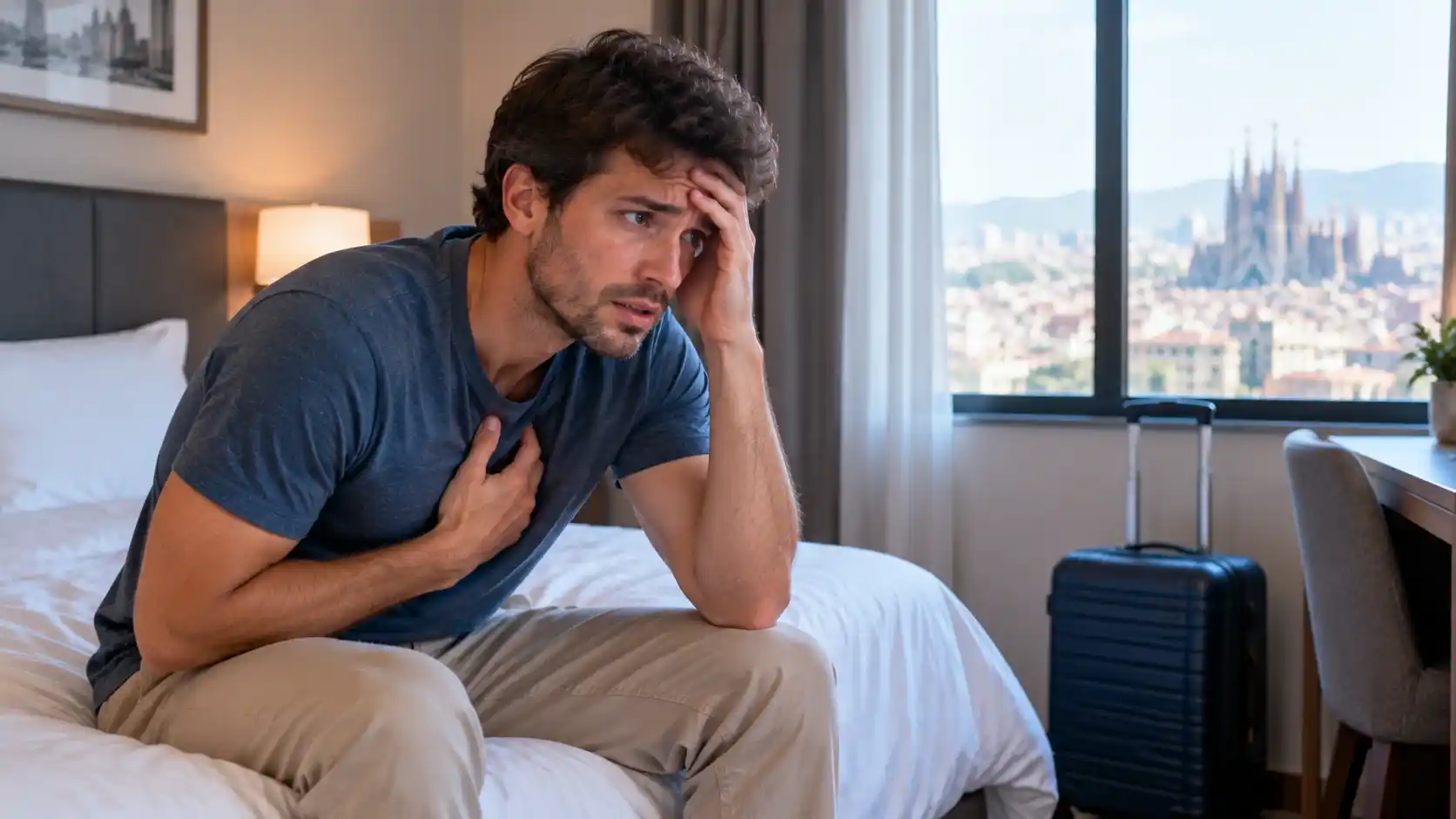
Experiencing anxiety while travelling in Barcelona?
Experiencing anxiety symptoms while travelling can be particularly unsettling. You may be away from home, unfamiliar with the local healthcare system or unsure where to seek medical advice.
If you are visiting Barcelona and feel unwell, it is important to distinguish between symptoms that may be suitable for a routine medical consultation and those that require emergency care.
For severe chest pain, serious breathing difficulties, fainting or other signs of a medical emergency, call 112, Spain’s emergency number.
For non-emergency concerns, a medical professional can help assess your symptoms, consider possible physical causes and advise you on appropriate next steps.
At Medical Care Barcelona, international visitors, expatriates and residents can access private medical consultations in English and other languages. Depending on your needs, appointments may be available online, at the clinic or through a doctor visit to your home or hotel.
An online consultation may be a convenient starting point for non-emergency concerns, but it cannot replace emergency assessment when symptoms suggest a potentially serious condition.
If anxiety episodes are recurring or interfering with your trip, seeking professional advice can help you understand what may be happening and identify the most appropriate support.
Your health and peace of mind matter. If you are unsure whether your symptoms are caused by anxiety or another condition, it is safer to seek medical advice than to make assumptions.
Conclusion
Anxiety attacks can cause a wide range of physical and emotional symptoms, from racing thoughts and muscle tension to palpitations, dizziness and breathlessness. Although these experiences can be frightening, understanding your symptoms and learning simple coping strategies may help you respond more confidently.
Gentle breathing, grounding techniques and reducing stimulation can be useful during an episode. If anxiety is recurring or affecting your daily life, professional support can help you understand possible triggers and explore appropriate options.
Remember that anxiety can resemble other medical conditions, including a heart attack. Never assume that severe, new or unexplained symptoms are simply anxiety. If you suspect a medical emergency in Barcelona, call 112.
For non-emergency medical concerns, Medical Care Barcelona offers accessible healthcare options for international patients, residents and visitors who need medical advice during their stay.